


Picking something up from the floor is one of the first movements we learn as children. No one teaches us step by step. We simply learn by doing.
But in the gym, the deadlift can suddenly feel confusing.
One person tells you to keep your back straight. Another says to push your hips back.
Someone else talks about bracing, bar path, slack, hip position and foot pressure.
Before you know it, a simple lift starts to feel complicated. And then there is the common fear: “What if I hurt my back?”
That fear is understandable. Deadlifts can look technical and intense, but they are not only for advanced lifters. When you learn the movement step by step, use a weight you can control and focus on the basics, the deadlift can be a safe and useful strength exercise.
In this guide, you'll learn the key principles of a good deadlift, what the movement should feel like, and how to build confidence step by step.
Why deadlifts can feel different for everyone
Before we go into technique, it helps to know one thing: not every deadlift will look the same.
Your body proportions can change how the movement feels.
Someone with long arms may find it easier to reach the bar, while someone with long legs and shorter arms may need to bend their knees more. Their knees may get in the way, or their heels may want to lift from the floor. That does not mean they are doing it wrong. It means their setup may need to look different.
For some people, a classic barbell deadlift from the floor works well. For others, a trap bar deadlift, kettlebell deadlift or elevated deadlift may feel safer and easier to control.
That is why advice from another lifter does not always work for you. The goal is not to copy someone else’s exact position.
The goal is to find a setup where you can:
- keep your feet stable
- reach the weight without losing control
- keep the bar close
- brace properly
- and lift without your lower back taking over
How to deadlift correctly: a simple step-by-step setup
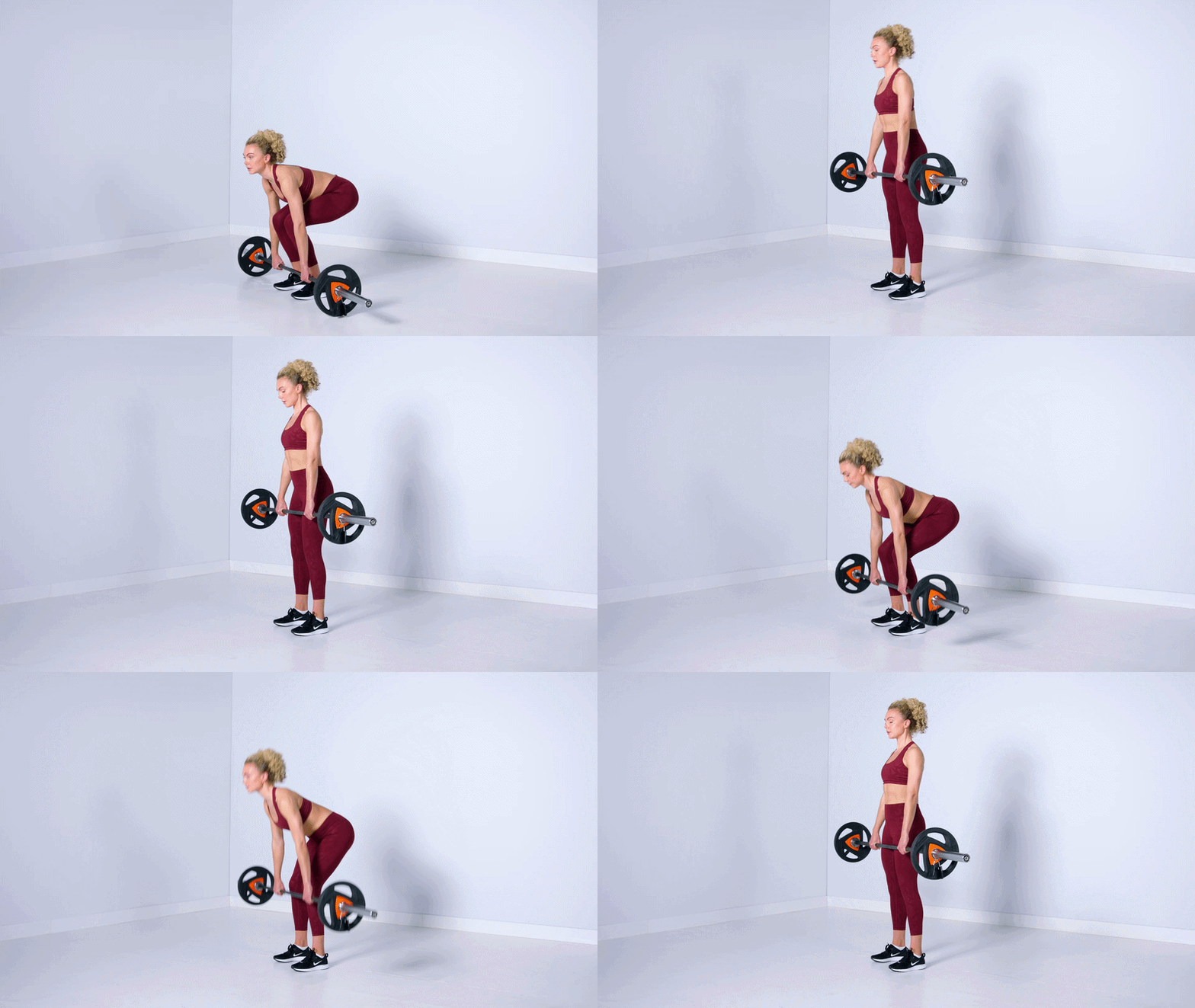
1. Set your feet and bar position
Start with your feet about hip-width apart. You should feel balanced and stable.
The bar should be close to your body and positioned roughly over the middle of your foot. Not too far forward over your toes, and not so close that you lose your setup before you start.
A good starting position helps you keep control before the weight even leaves the floor.
2. Grip the bar and let your arms hang long
Reach down and grip the bar just outside your legs. Your arms should hang straight down, like strong hooks. They hold the bar, but they are not trying to lift it like a row or a bicep curl.
When you reach for the bar, your shins should be close to it. If they are not, the bar is probably too far away.
Unlike a squat, a deadlift starts by pushing your hips back rather than sitting straight down.
3. Brace your core and create tension
Before you lift, make your body strong and stable. Brace your core like you are preparing for someone to gently push against your stomach.
Keep your back strong, but don’t overarch it. Then create tension before the bar leaves the floor.
This is also called taking the slack out of the bar. Think of towing a car with a rope. If the rope is loose and the car suddenly drives away, the pull is rough and stressful. The same can happen in a deadlift if you jerk the bar from the floor.
Create tension first. Then lift smoothly.
4. Push the floor away
When you start the lift, think: Push the floor away with your feet.
Your hips, shoulders and head should rise together. Keep your head in line with your spine, with your chin slightly tucked, as if you are holding a tennis ball under your chin.
Your back stays stable and the bar stays close to your body.
5. Stand tall and lower with control
As the bar passes your knees, drive your hips forward and stand tall.
At the top, finish strong, but don’t lean back. You don’t need to overextend your lower back to complete the lift.
Stand tall, then lower the bar with control and keep it close to your body.
How should a deadlift feel when you do it correctly?
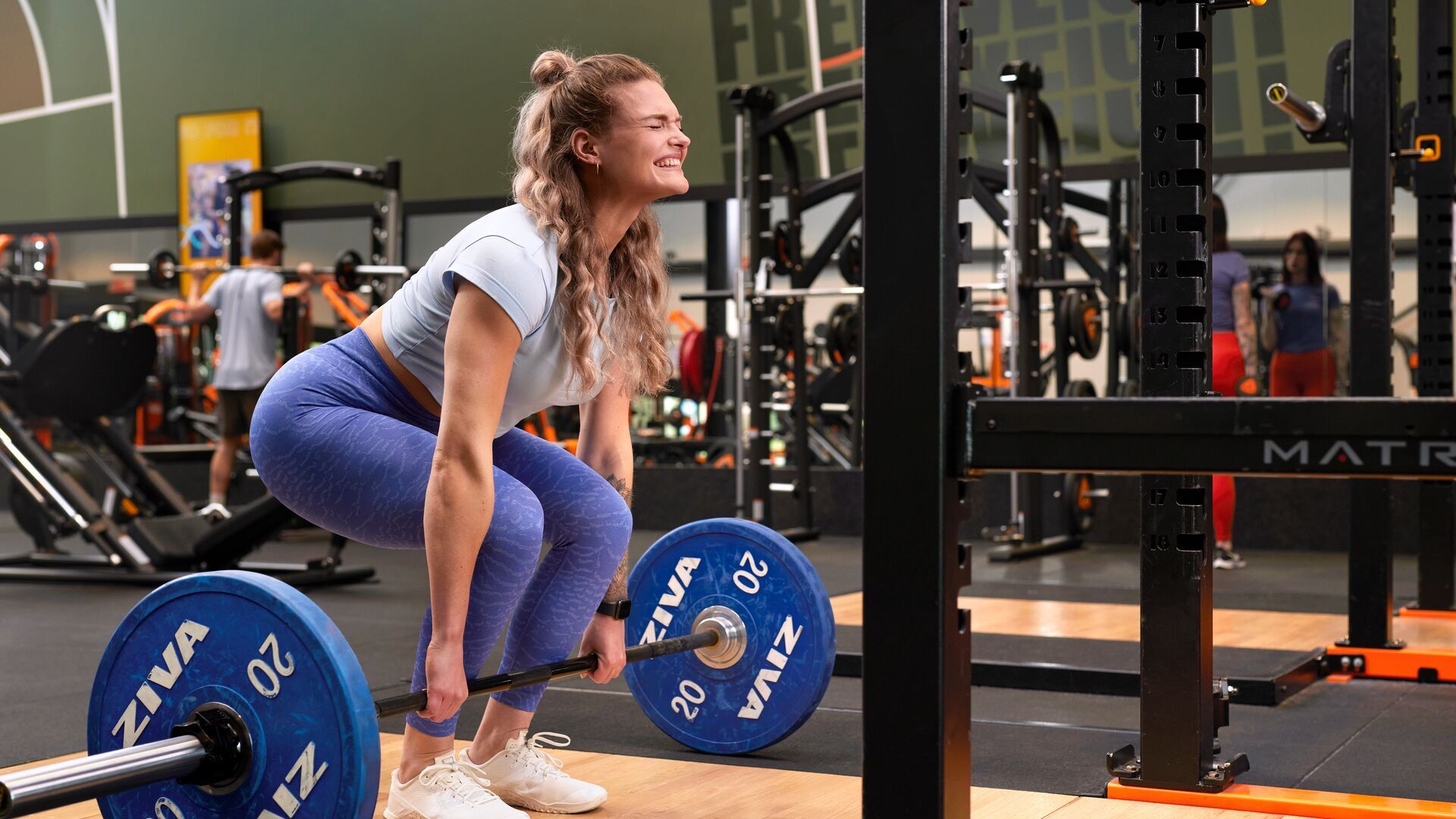
A deadlift should feel strong, controlled and connected.
You may notice:
- Your glutes and hamstrings working as you stand up.
- Your legs pushing into the floor.
- Your core bracing to keep you stable.
- Your back working to hold its position, not to lift the weight on its own.
- Tension before the bar leaves the floor.
- The bar staying close to your body throughout the movement.
A simple way to remember it:
"Your legs and hips move the weight; your back holds the position."
It may not feel perfect at first, and that is normal. Deadlifting is a skill. In the beginning, the goal is not to lift as much weight as possible. The goal is to learn what a controlled deadlift feels like.
Mild muscle fatigue in your lower back can be normal. Sharp pain, increasing pressure or loss of control is a sign to stop, lower the weight and check your setup.
Everyone's deadlift looks a little different. If you'd like some extra guidance, a personal trainer can help you find a setup that feels strong, comfortable and safe for your body.
Does the deadlift work your back or your legs?
A deadlift is a compound exercise, meaning it uses several muscle groups at the same time. That is one reason it can feel like a full-body movement.
The main muscles involved are:
- glutes
- hamstrings
- quads
- lower back muscles
- upper back
- core
- grip muscles
Your glutes and hamstrings help extend your hips. This is a big part of standing up from the bottom position. Your quads help you push the floor away at the start of the lift. If you'd like to strengthen them further, exercises like hip thrusts can be a useful addition to your routine.
Your back muscles help keep your spine and upper body stable. They should be active, but they should not feel like they are doing all the work.
A good way to think about it is this:
“Your legs and hips create the movement. Your back keeps the position strong.”
If you only feel the lift in your lower back, or if the bar pulls you forward, lower the weight and check your setup. If you feel sharp pain or increasing pressure during the set, stop and reset.
If pain continues, ask a qualified trainer or health professional for help.
Common deadlift mistakes and how to fix them
Deadlifts can feel technical, but most beginner mistakes come down to a few simple things.
1. Rounding the lower back
This often happens when the weight is too heavy, the setup is rushed, or there is not enough tension before lifting.
Fix: Start lighter, brace your core and create tension before the bar leaves the floor. Aim for a strong, stable back position you can control. You don’t need to force an extreme arch.
2. Letting the bar drift away
If the bar moves away from your body, the lift often feels heavier and less controlled.
Fix: Start with the bar close and keep it close during the whole lift. Think about moving the bar up along your legs.
3. Squatting instead of hinging
A deadlift is not the same as a squat. In a squat, your hips move more downward. In a deadlift, your hips move back and your torso leans forward more.
Fix: Think “hips back” instead of “sit down”. You should feel tension in your hamstrings before the bar leaves the floor.
4. Jerking the bar from the floor
Pulling too quickly from the floor can make the lift feel uncontrolled.
Fix: Create tension first, take the slack out of the bar, then push the floor away. Smooth is stronger.
5. Overextending at the top
Some people finish the lift by leaning far back. This is not needed and can put extra stress on the lower back.
Fix: Stand tall, keep your ribs down and stop when your body is straight.
6. Looking too far up
Looking up too much can create unnecessary tension in your neck.
Fix: Keep your neck neutral. Look slightly in front of you on the floor. Think of the crown of your head reaching upward while your chin stays slightly tucked, as if you are holding a tennis ball under your chin.
Is deadlifting safe for beginners?
Yes, deadlifting can be safe for beginners when it is done with control, a good setup and gradual progression.
The deadlift trains a movement you already use in daily life: picking something up from the floor. The movement itself is not dangerous by default. Like any strength exercise, it depends on load, control and progression.
As a beginner, focus on learning the movement first. Start light, keep the bar close, brace your core and only add weight when your form feels stable and repeatable.
Deadlifting should build confidence, not fear. If you're new to the gym altogether, remember that everyone starts somewhere and confidence grows with practice.
How to start deadlifting as a beginner
Start with a weight you can control. This could be a light barbell, dumbbells or a kettlebell.
Practice the movement before you focus on adding weight. After each set, ask yourself:
- Did I keep the bar close?
- Did I brace before lifting?
- Did my hips, shoulders and head rise together?
- Did my back stay stable?
A short video from the side can help you see things you may not feel yet. Use it as feedback, not as a reason to judge yourself.
You can also use the Basic-Fit app for workout inspiration and to build confidence with new strength exercises.
For beginners, deadlifting 1–2 times per week is usually enough. Start with:
- 2–3 sets
- 5–8 controlled reps
- light to moderate weight
- enough rest between sets
Add weight only when the movement feels stable and repeatable.
Best deadlift variations for beginners
These variations can help you learn the movement in a way that fits your body and confidence level.
- Kettlebell deadlift: useful if the barbell feels intimidating.
- Elevated deadlift or rack pull: useful if reaching the floor feels difficult.
- Trap bar deadlift: useful if your body proportions make the barbell setup harder.
- Dumbbell Romanian deadlift: useful if you want to learn the hip hinge.
- Barbell deadlift: useful once you understand the setup and can keep control.
The best variation is not always the hardest one. It is the one you can perform safely, consistently and with confidence.

Your simple deadlift checklist
Before each set, check:
- Are my feet stable and about hip-width apart?
- Is the bar close, over the middle of my foot?
- Are my arms long, like hooks?
- Did I brace my core?
- Did I create tension before lifting?
- Am I pushing the floor away?
- Are my hips, shoulders and head rising together?
- Is the bar staying close to my body?
- Am I standing tall without leaning back?
Deadlift cues to remember
At first, this checklist helps you build confidence. Later, it becomes automatic.
When you understand the basics, it becomes a simple movement: set up close to the bar, create tension, brace your core, push the floor away and stand tall.
The deadlift doesn’t need to feel intimidating. Start with a variation that fits your body, use a weight you can control, and focus on the basics: create tension, keep the weight close, push the floor away and stand tall.
You do not need perfect form on day one. You need a safe starting point and enough practice to build confidence.
Start light. Move with control. Progress slowly. That is how you deadlift safely and with confidence.
This article is for general information only. Individual needs can vary depending on health status, training experience, and personal goals. If you have a medical condition or specific health concerns, consider seeking advice from a qualified healthcare professional


