



“How much do you bench?”
It is probably one of the first questions you hear when people start noticing your progress in the gym. So yes, the bench press is great for building strength, fitness and muscle.
The bench press is one of the most popular strength exercises in the gym. It seems simple: lie down, lower the bar and press the weight back up. But once you try it yourself, it can feel less simple than it looks.
- Where should your hands go?
- Should your elbows stay close or move out?
- Should you feel it in your chest, shoulders or arms?
- And how do you know if you are doing it safely?
By the end of this blog, you will understand how to set up a safe and effective bench press, which muscles should be working, how to avoid common mistakes, and how to adapt the exercise to your own training goal.
Why bench presses can look different for everyone
The bench press is a pushing exercise for your upper body; your chest, shoulders and triceps press the weight. Your upper back, core and feet help keep your body stable. Before we go further into technique, it helps to know one thing: not every bench press will look exactly the same.
Your body proportions can change how the movement feels. Someone with longer arms usually has to move the bar through a larger range of motion. Someone with shorter arms or a bigger ribcage may naturally have a shorter bar path.
Shoulder mobility, chest size, grip width, and your ability to create an upper-back arch can also change your setup. That does not mean someone is doing it wrong. It means their setup may need to look different.
For some people, a barbell bench press feels natural. For others, a chest press machine, dumbbell bench press or incline press may feel safer and easier to control at first.
Don't just try to copy someone else’s exact position. The goal is to find a setup where you can keep your feet stable, keep your upper back tight, lower the weight with control and press without pain or loss of control.
A good bench press is about moving safely, consistently and with confidence.

How to bench press correctly: a step-by-step setup
1. Set your body and feet
Lie down with your eyes roughly under the bar if you are using a barbell. Keep your head, upper back and hips on the bench.
Place your feet firmly on the floor. They help create stability, even though your chest, shoulders and triceps do most of the pressing work.
2. Create upper-back tension
Pull your shoulder blades slightly back and down, as if you are gently trying to hold the bench with your upper back.
This gives your shoulders a more stable position and helps your chest press from a stronger base. Think stable, not stiff.
3. Choose a grip that fits your goal
For most beginners, a grip slightly wider than shoulder-width works well. Try to keep your wrists stacked above your elbows as much as possible.
A narrower grip usually shifts more work toward the triceps. A wider grip may shorten the range of motion, but can also feel harder on the shoulders. Choose a grip that lets you control the weight without discomfort.
4. Lower the weight with control
Lower the bar or handles toward the middle or lower part of your chest. Your elbows should not flare straight out to the side. A natural angle usually feels more controlled.
Do not drop the weight quickly. Lower it with control, stay tight and keep your shoulders stable.
5. Press back up and stay stable
Press the weight away while keeping your body stable. Think about pushing yourself into the bench while pressing the weight up.
At the top, finish with control. Do not slam your elbows or lose tension. Keep your feet planted, your upper back tight and your wrists strong.
Trainer's tip: Control the weight down. Press with purpose up.
How should the bench press feel when done correctly?
You should feel your chest working, your shoulders and triceps helping, and your upper back pressing into the bench.
It is normal to feel your triceps near the end of a set. Beginners may also feel the shoulders more at first, especially if the setup is not yet stable.
What you do not want is sharp shoulder pain, wrist pain, or the feeling that the weight is falling out of control. If that happens, lower the weight and check your setup.
For muscle growth, a good rep usually feels controlled and intentional, not like a quick push just to get the weight up.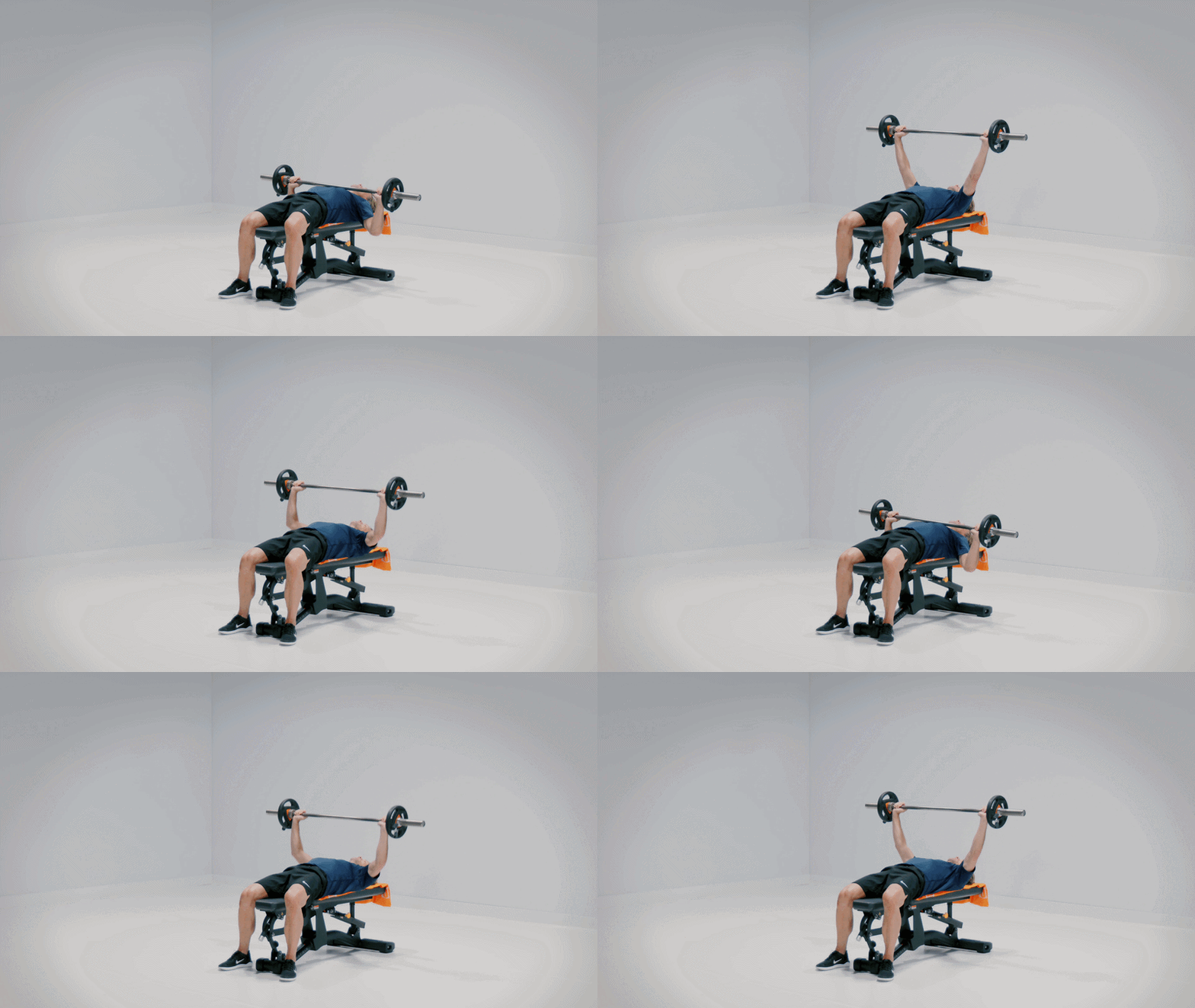
What muscles does the bench press work?
The bench press is a compound exercise. That means several joints and muscles work together.
The main muscles involved are:
- chest muscles
- front shoulders
- triceps
- upper back for stability
- core for body tension
Most people think of the bench press as a chest exercise. That is true, but your shoulders and triceps also help. Your upper back helps keep your body stable on the bench.
A simple way to think about it: your chest, shoulders and triceps press the weight; your upper back, core and feet keep the position strong.
Bench press for strength vs muscle growth
Before choosing your technique, it helps to know your goal. A bench press for maximum strength can look different from a bench press for building as much chest muscle as possible.
If your goal is maximum bench press weight
When someone trains mainly to lift the heaviest possible weight, the technique is often designed to make the movement more efficient. That can mean a stronger arch, tighter shoulder blades, more leg drive, and a bar path that helps the lifter press the most weight.
In powerlifting, the goal is to move the weight safely and efficiently within the rules. A shorter range of motion can help because the bar travels less distance.
If your goal is muscle growth
If your main goal is to build muscle, especially in the chest, the goal is not to make the movement as short as possible. You still need a safe setup, but you also want a controlled range of motion, enough stretch, and tension on the target muscle.
That means you should not copy an extreme competition-style bench press just because it lets someone lift more weight.
Is bench pressing safe for beginners?
Yes, bench pressing can be safe for beginners when it is done with control, good setup and gradual progression.
Like any strength exercise, it depends on load, control and technique.
If your main goal is to build muscle, especially in the chest, the goal is not to make the movement as short as possible. You still need a safe setup, but you also want a controlled range of motion, enough stretch, and tension on the target muscle.
Bench pressing should build confidence, not fear.
Safety tips before you start
Because you are lying under the weight, bench press safety matters.
- If you are using a barbell, make sure the rack height is set correctly.
You should be able to unrack the bar without losing your shoulder position. If you have to reach too far up, your setup may already fall apart before the first rep.
- If you are training heavy, have someone spot you or bench in a rack with safety arms.
A spotter can help you unrack the bar and assist if you cannot complete a rep. If you enjoy training with others, spotting each other is also a great way to support one another and build confidence in the gym. You can bring your friend or ask someone else at the club.
- Be careful with collars.
Collars keep the plates in place, which is useful for most exercises. But when bench pressing alone without safety arms or a spotter, some lifters choose not to use collars so they can tilt the bar and slide the plates off in an emergency. This is not ideal, and it can be risky for people around you. The better option is to use safety arms or ask someone to spot you.
- Avoid a thumbless grip.
Keep your thumb wrapped around the bar so the bar cannot slip out of your hands.
How to start bench pressing
Start with a variation you can control. This could be a chest press machine, dumbbells, a push-up variation or a light barbell bench press.
Practice the movement before you focus on adding weight. After each set, ask yourself:
- Did I keep my feet stable?
- Did I keep my upper back tight?
- Did I lower the weight with control?
- Did my wrists and elbows stay in a strong position?
- Did the movement feel safe and repeatable?
For beginners, bench pressing 1-2 times per week is usually enough. Start with:
- 2-3 sets
- 6-12 controlled reps
- light to moderate weight
- enough rest between sets
Add weight only when the movement feels stable and repeatable.
If you're new to strength training, the Basic-Fit app can help you build confidence with guided workouts and structured training plans that include exercises like the bench press.
Best bench press variations for beginners
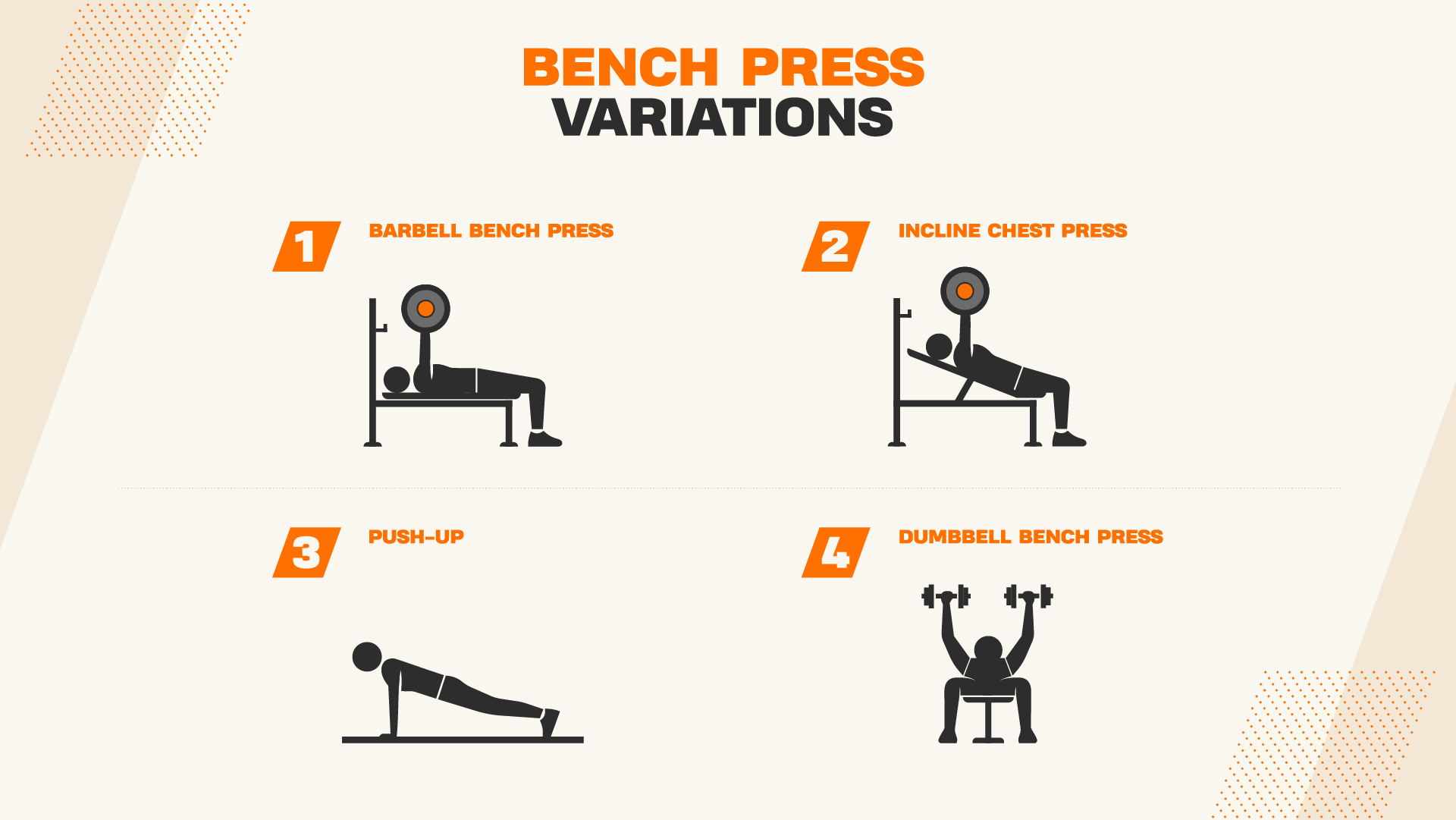
You do not have to start with a heavy barbell bench press. Different variations can help you learn the movement with more control.
- Chest press machine: useful if the barbell feels intimidating and you want more stability.
- Dumbbell bench press: useful for learning control on both sides.
- Incline chest press: useful if you want to train more upper chest and shoulders.
- Push-up: useful as a bodyweight option that also trains core control.
- Barbell bench press: useful once your setup and control are consistent.
The best variation is the one you can perform safely, consistently and with confidence.
Common bench press mistakes and how to fix them
1. Letting the shoulders move forward
If your shoulders roll forward at the bottom, the movement often feels less stable and more stressful.
Fix: create upper-back tension before you start and keep your shoulder blades stable on the bench.
2. Using a weight that is too heavy
If you cannot lower the weight with control, it is too heavy for now.
Fix: start lighter and build up when each rep looks and feels consistent.
3. Flaring the elbows too much
Elbows straight out to the side can make the shoulders feel uncomfortable for many people.
Fix: let your elbows move at a natural angle. They do not need to stay glued to your body, but they should not shoot straight out either.
4. Bouncing the bar
Bouncing the bar off the chest removes control and can make the exercise less effective.
Fix: lower the bar smoothly, lightly touch or pause, then press back up.
5. Copying a technique that does not match your goal
A strong lifter may use a big arch, wide grip and short range of motion to lift more weight. That can be useful for maximum strength, but not always for muscle growth or beginner control.
Fix: choose the technique that matches your goal. If you want more chest growth, focus on control, range of motion and tension. If you want a stronger max bench, focus more on efficiency, stability and specific technique practice.
6. Forgetting the feet
Your feet help keep your body stable. If they move around, your whole setup becomes less controlled.
Fix: place your feet firmly on the floor before you start.
Your simple bench press checklist
Before each set, check:
- Are my feet stable on the floor?
- Are my eyes roughly under the bar?
- Is my upper back tight on the bench?
- Are my shoulder blades slightly back and down?
- Is my grip comfortable and matched to my goal?
- Are my wrists stacked and strong?
- Can I lower the weight with control?
- Are my elbows moving at a natural angle?
- Am I pressing up while staying stable?
Conclusion
The bench press can be a great exercise for building upper body strength and muscle, but it works best when you know what you are training for.
If your goal is to lift the most weight, your technique may focus more on efficiency, stability and a shorter range of motion. If your goal is muscle growth, focus more on control, tension and a useful range of motion.
Remember, learning the bench press is not about rushing to lift heavier weights. It is about building a movement you can repeat safely and improve over time. The Basic-Fit app can help by giving you a clear training structure, so you can focus on practising good technique and progressing at your own pace.
This article is for general information only. Individual needs can vary depending on health status, training experience, and personal goals. If you have a medical condition or specific health concerns, consider seeking advice from a qualified healthcare professional


